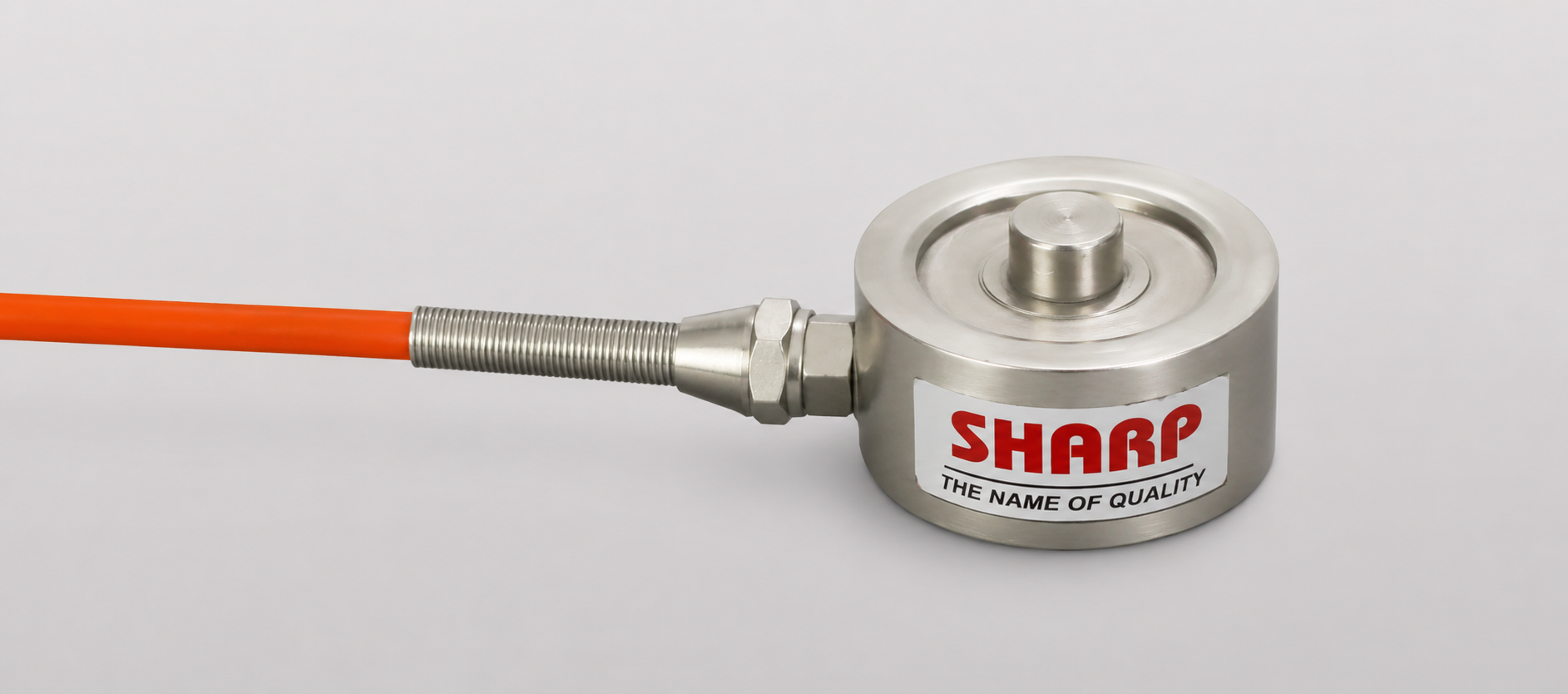
Load Cell Solutions for Chemical and Petrochemical Industries: Precision That Drives Safer and Smarter Operations
In chemical and petrochemical industries, precision is not optional and it directly influences safety, productivity, compliance, and profitability. From measuring raw materials to monitoring reaction processes and managing bulk storage, accurate weight measurement systems play a critical role across operations.
At Sharp Electronics, we understand the demanding environments of these industries and the growing need for advanced load sensing technologies that deliver consistent performance under extreme industrial conditions. Modern load cell solutions are no longer limited to weight measurement—they now contribute to process optimization, automation, predictive maintenance, and operational excellence.
This blog explores how advanced load cell technologies are transforming chemical and petrochemical operations while helping businesses achieve higher efficiency, better control, and long-term reliability.
Why Accurate Load Measurement Matters in Chemical and Petrochemical Industries?
Chemical and petrochemical plants operate under complex process conditions involving hazardous materials, high temperatures, pressure variations, and continuous production cycles. Even minor measurement inaccuracies can result in:
- Material wastage
- Production inconsistencies
- Compliance challenges
- Safety risks
- Increased operational costs
High-performance load cell systems provide accurate and continuous weight monitoring to support critical applications such as:
- Tank weighing
- Hopper and silo measurement
- Reactor vessel monitoring
- Batch processing
- Material transfer systems
- Filling and packaging operations
The result is improved process control, reduced downtime, and greater confidence in decision-making.
Choosing the Right Load Cell for Industrial Applications
Every industrial application requires a different approach to weight measurement. Selecting the correct solution ensures optimal performance and longer operational life.
1. Strain Gauge Technology for Reliable Measurement
A strain gauge load cell remains one of the most widely adopted technologies across industrial weighing applications. By converting mechanical force into electrical signals, it delivers highly accurate measurements even in demanding production environments.
This technology is especially suitable for continuous monitoring and process-critical operations.
2. Compression-Based Solutions for Heavy Industrial Loads
For tanks, silos, and reactor vessels, a compression load cell offers dependable vertical force measurement and excellent stability under heavy loads.
For applications requiring higher capacity and environmental resistance, a canister load cell provides robust performance and reliable operation under challenging industrial conditions.
3. Tension Monitoring for Material Handling Systems
Applications involving suspended loads, lifting mechanisms, and force measurement often benefit from a tension load cell.
Similarly, the s-beam load cell is commonly selected where both tension and compression measurements are required within a single system, making it versatile for industrial process control.
4. Efficient Solutions for Platform and Structural Weighing
For platform scales and production systems, the bending beam load cell delivers excellent accuracy for medium-capacity applications.
Where ruggedness and consistent performance are priorities, a shear beam load cell is often preferred due to its ability to handle side forces and industrial operating conditions effectively.
The Rise of Digital Load Cell Technology in Modern Plants
Industrial automation is changing how chemical and petrochemical facilities manage operations.
A digital load cell represents the next generation of industrial weighing technology by offering:
- Higher signal stability
- Improved noise resistance
- Faster data transmission
- Better integration with automation systems
- Enhanced diagnostic capabilities
With increasing adoption of Industry 4.0 practices, digital load monitoring enables real-time process visibility and supports data-driven manufacturing decisions.
This evolution allows operators to identify abnormalities early and reduce unplanned maintenance interruptions.
Supporting Equipment That Maximizes Performance
A load measurement system performs best when integrated with the right supporting components.
1. Load Cell Amplifier for Signal Optimization
A load cell amplifier enhances signal quality and ensures accurate transmission of weight data across industrial control systems.
This becomes particularly valuable in large facilities where long cable runs and electrical interference may affect measurement reliability.
2. Load Cell Indicator for Better Visibility
A load cell indicator provides operators with real-time display and monitoring capabilities, improving process transparency and operational response.
3. Load Cell Calibration for Long-Term Accuracy
Regular load cell calibration is essential to maintain precision and ensure compliance with industrial quality standards.
Scheduled calibration helps reduce measurement drift, minimize production errors, and extend equipment lifespan.
Industrial Weighing Solutions That Improve Operational Efficiency
Today’s chemical and petrochemical industries are increasingly investing in integrated weighing ecosystems rather than standalone equipment.
A modern industrial weighing scale solution enables:
- Automated inventory control
- Batch consistency
- Production traceability
- Reduced manual intervention
- Higher throughput
Advanced systems also support integration with PLCs, SCADA platforms, and cloud-based monitoring environments.
These capabilities help facilities move toward smarter manufacturing while maintaining strict quality and safety standards.
Load Cell Market Trends: India and Global Outlook
The global load cell market continues to experience strong growth due to industrial automation, digital transformation, and increasing demand for process optimization.
Across global manufacturing sectors, industries are prioritizing connected weighing systems that offer predictive insights and remote monitoring capabilities.
In India, rapid industrial expansion, investments in specialty chemicals, refinery modernization, and smart factory adoption are accelerating demand for advanced load sensing technologies.
Some major trends shaping the market include:
- Increased adoption of digital weighing infrastructure
- Growth in IoT-enabled monitoring systems
- Expansion of automated production facilities
- Higher focus on energy-efficient operations
- Greater emphasis on predictive maintenance
For chemical and petrochemical businesses, these trends create opportunities to improve competitiveness while maintaining operational safety.
How Advanced Load Cell Solutions Deliver Customer Value?
Customers today expect more than measurement accuracy.
They require solutions that help them:
- Reduce process variability
- Increase production efficiency
- Lower maintenance costs
- Improve workplace safety
- Achieve faster ROI
- Scale operations with confidence
Selecting the right load cell architecture creates measurable long-term business value and supports sustainable industrial growth.
As chemical and petrochemical operations become increasingly automated and performance-driven, dependable load measurement solutions continue to play a central role in achieving operational excellence. From improved process visibility to smarter decision-making and enhanced plant efficiency, advanced load cell technologies are shaping the future of industrial manufacturing.
Sharp Electronics remains committed to supporting industries with reliable, high-precision load cell solutions designed to meet evolving operational challenges and help customers build more efficient, safer, and future-ready facilities.