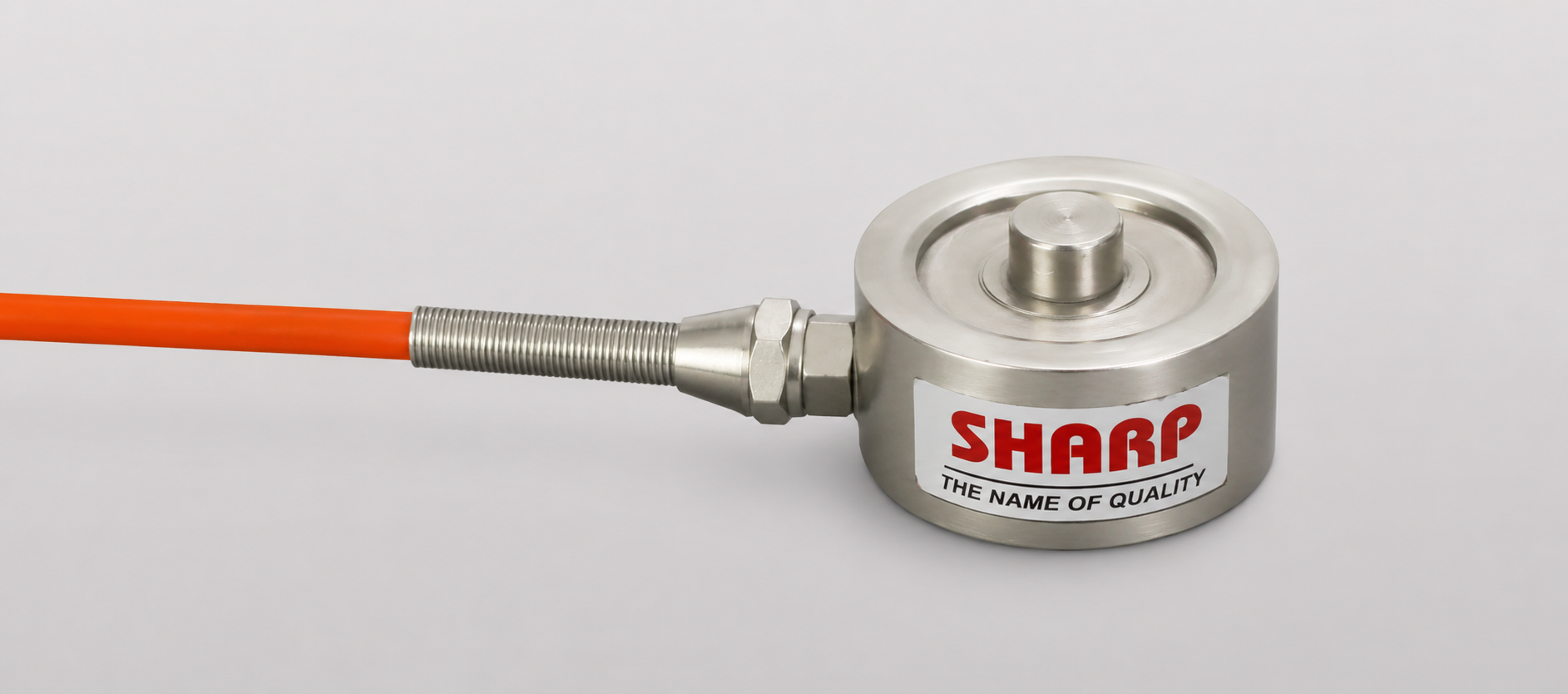
Load Cell for Industrial Automation: Applications & Benefits
The benefits of industrial automation are numerous, with improved productivity, reduced manual involvement, and consistent product quality being just some of them. Overall, industrial automation has revolutionized the manufacturing industry, leading to greater productivity, less manual work, and better product quality. The load cell is a highly accurate sensor that is used for measuring force, and is found in many automated weighing and force measurement systems. Whether it's monitoring raw materials, controlling production batches, or ensuring safe lifting operations, load cells play a vital role in smart industrial processes.
Sharp Electronics are ISO 9001:2015 certified manufacturers and exporters of industrial weighing systems, load cells, weighing controllers, and platform scales and customised weighing solutions. It provides a variety of load cells such as shear beam, S-type, pancake, button type, pin type, miniature, column type, and different types of industrial load cells for various automation applications. They also have weighing systems that are compatible with PLC systems, automation platforms, and industrial controllers, ensuring accurate process control.
What is the meaning of Load Cell?
A load cell is an electromechanical sensor designed to convert mechanical pressure into an electrical signal in order to measure the force or weight. Most commonly, the industrial load cells are of the strain gauge type, which means that a change in the resistance of the strain gauge is experienced when placed under force. This change is accomplished by a weighing controller or indicator which shows accurate weight values.
In industrial automation, load cells are used continuously to transmit weight data for immediate control or decision making by the machine to control systems for production, packaging, batching, filling and quality control.
What is the reason behind the use of Load Cells in Industrial Automation?
To keep up the pace of automation, the data must be accurate. Weight is one of the most crucial process parameters; load cells ensure industries achieve:
- Real-time monitoring
- Automatic process control
- Consistent product quality
- Reduced production losses
- Enhanced operational safety
- Improved productivity
Manufacturers can connect load cells to PLCs, SCADA and industrial controllers to automate whole production lines with minimum manpower.
How Load Cells Work in Automated Systems
The working process is easy but very effective:
- The load or force exerts a force on the load cell.
- The internal strain gauges are slightly bent.
- Their electrical resistance varies in direct proportion.
- The signal is amplified by the weighing controller.
- The signal is processed by the controller.
- The system shows the accurate weight and feeds information to PLCs or automation software for weight control.
Applications of Load Cells in Industrial Automation
Load cells are used in a wide variety of industrial automation applications, such as:
1. Automated Filling Systems- Load cells automatically halt the filling operation once the desired weight has been reached to ensure accurate filling of powders, liquids, chemicals, food products and pharmaceuticals.
- Eliminates overfilling
- Reduces material wastage
- Improves filling accuracy
2. Hopper and Silo Weighing- Load cells are used in industrial hoppers and silos to keep track of the material quantity in real time.
- Continuous stock monitoring
- Accurate batch preparation
- Improved inventory management
3. Conveyor Belt Weighing- Belt weighing systems weigh materials that are flowing in production lines.
- Continuous production monitoring
- Increased throughput
- Accurate production reporting
4. Batch Processing- Load cells are used for automated batching in food, chemicals, paints and pharmaceuticals industries.
- Consistent product quality
- Accurate ingredient proportioning
- Faster production cycles
5. Packaging Machines- Load cells are used to check the weight of product to be sealed by automatic packaging machines.
- Meeting weight criteria
- Reduced product giveaway
- Improved customer satisfaction
6. Crane Overload Protection- Cranes utilize load cells to track lifting loads and ensure they are not overloaded.
- Enhanced workplace safety
- Protection of lifting equipment
- Reduced accident risk
7. Tank Weighing Systems- Load cells are used to continuously monitor the load in storage tanks that hold chemicals, oils, food products and liquids.
- Accurate inventory tracking
- Leak detection
- Automated replenishment
8. Material Testing- Load cells are used to measure forces in compression and tensile testing in industrial testing machines.
- High testing accuracy
- Reliable quality control
- Standard-compliant testing
Types of Load Cells Used in Industrial Automation
Sharp Electronics manufactures several load cell types depending on the application, such as:
- Shear Beam Load Cell
- S-Type Load Cell
- Pancake Load Cell
- Button Type Load Cell
- Pin Type Load Cell
- Stud Type Load Cell
- Miniature Load Cell
- A Load Cell with a column design.
- Bellows Type Load Cell
- Rope Type Load Cell
- Cup Ball Load Cell
Major Benefits of Load Cells in Industrial Automation
Load cells offer many important benefits in industrial automation.
- Exceptional Accuracy- Load cells give weight measurements with high accuracy, which guarantees process consistency.
- Increased Productivity- Manual handling is reduced and production time is increased by automated weighing.
- Improved Product Quality- Regular weight control reduces quality variations.
- Reduced Material Waste- Accurate weighing ensures an appropriate use of materials.
- Enhanced Worker Safety- Load monitoring prevents overload equipment and work site accidents.
- Easy Automation Integration- Modern load cells are fully compatible with PLCs, SCADA, enterprise resource planning and industrial controllers.
- Lower Operating Costs- Labor costing is reduced and errors are reduced, and the production efficiency is enhanced by the process of automation.
- Long Service Life- Built for industrial use, it's strong enough for difficult conditions.
Industries Using Load Cells
Load cells are used in many industries, including:
- Manufacturing
- Automotive
- Food Processing
- Pharmaceutical
- Chemical
- Cement
- Steel
- Agriculture
- Logistics
- Packaging
- Mining
- Textile
- Warehousing
- Material Handling
- Construction
Factors to Consider When Selecting a Load Cell
There are a number of considerations in selecting the appropriate load cell:
- Load capacity
- Accuracy class
- Environmental conditions
- Mounting configuration
- Material construction
- IP protection rating
- Output signal compatibility
- Automation integration requirements
Choosing the right load cell ensures the reliability and efficiency of the system.
Why Choose Sharp Electronics?
Sharp Electronics is a trusted name in providing reliable weighing and automation solutions. Their advantages include:
- Established in 2000
- ISO 9001:2015 Certified
- A variety of industrial load cells are available
- Customized weighing solutions
- Incorporating PLC and automation.
- Support in installation and commissioning
- Calibration services
- Preventive maintenance
- Technical consultation
- Annual Maintenance Contracts (AMC)
- Company offers efficient after-sales service and support.
Conclusion
Load cells are the building blocks of modern industry automation, providing the accuracy and reliability needed for production processes. These sensors boost productivity, quality, waste reduction and safety in the workplace, from automated batching and filling to conveyor weighing, tank monitoring, and overload protection.
Sharp Electronics provides a comprehensive selection of industrial load cells and integrated weighing systems designed to satisfy different industrial weighing automation needs, providing industries with reliable and high performance weighing solutions. Years of experience, proven quality specifications and extensive technical support enable Sharp Electronics to deliver high levels of performance and precision in the world of automated industry.