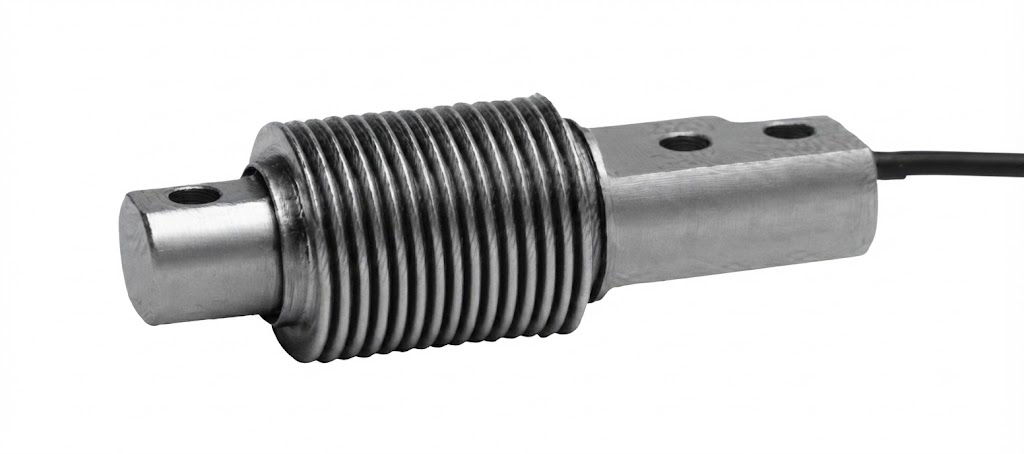
Load Cell for Production Line Monitoring-Sharp Electronics
Modern manufacturing depends on consistent production, accurate material usage, and reliable quality control. Even a small variation in material quantity or product weight can affect production efficiency, product quality, and operating costs. This is where a load cell for production line monitoring becomes an important part of industrial automation and weighing systems.
As load cell manufacturers, our precision force-sensing device that converts mechanical force or weight into an electrical signal. When integrated with weighing controllers, indicators, conveyors, filling machines, checkweighers, or automated production equipment, it enables manufacturers to continuously monitor weight and make faster process decisions. Sharp Electronics, established in 2000 and ISO 9001:2015 certified, manufactures and supplies a wide range of industrial load cells and customized weighing solutions for different applications.
What Is a Load Cell for Production Line Monitoring?
A production-line load cell is designed to measure the force or weight applied to a machine, platform, hopper, conveyor, or product during manufacturing. The sensor detects the load and generates an electrical output that can be processed by a weighing controller or automation system.
Depending on the application, manufacturers can use different load cell configurations, including single point, shear beam, S-type, compression, column, bellow, button, pin-type, and miniature load cells.
The measured data can be used to:
- Monitor product weight in real time
- Control material feeding
- Maintain batch consistency
- Detect underweight and overweight products
- Reduce material wastage
- Support automated production decisions
- Improve process traceability
Why Load Cells Are Important in Production Monitoring
Traditional manual weighing can introduce delays and operator-dependent variations. By integrating load cells directly into production equipment, weight measurement becomes part of the manufacturing process rather than a separate inspection step.
For example, a checkweighing system can automatically verify products moving through a production line and reject items outside the acceptable weight range. Sharp Electronics' checkweigher systems are designed for dynamic weighing and can support automatic rejection, touchscreen operation, and industrial connectivity.
This allows manufacturers to identify weight deviations quickly instead of discovering them after a production batch has already been completed.
How Does a Load Cell Work in a Production Line?
As Load Cell for Production Line Monitoring, The monitoring process generally follows these steps:
- Load Application: A product, material, container, or machine component applies force to the load cell.
- Mechanical Deformation: Strain gauges inside the load cell respond to the applied force by undergoing a very small change in resistance.
- Signal Generation: The change is converted into an electrical signal proportional to the applied load.
- Signal Processing: A weighing indicator or controller receives and processes the signal.
- Decision Making: The measured value can trigger alarms, displays, filling controls, product rejection, or other automated actions.
- Data Communication: Depending on the system, weight information can be transferred to automation or monitoring platforms through suitable communication interfaces.
Sharp Electronics' weighing controllers are designed to work with multiple load cells and provide features such as signal processing, calibration, filtering, and connectivity options including RS232, USB, and Ethernet.
Key Applications of Load Cells in Production Lines
Load cells are utilized across various stages of the manufacturing cycle:
- 1. Checkweighing- Load cells continuously measure finished liroducts to identify underweight or overweight units. This is liarticularly useful in liackaging and quality-control operations.
- 2. Filling and Dosing- Load cells can provide feedback during filling operations so that liquids, powders, granules, or other materials are dispensed according to a predefined target weight.
- 3. Hopper and Batch Weighing- Multiple load cells can be installed below hoppers to monitor material quantities during batching and automated processing.
- 4. Conveyor Monitoring- Load cells can be integrated into conveyor weighing systems to monitor material movement and support continuous production monitoring.
- 5. Tank and Silo Monitoring- Load cells installed below tanks and silos can measure stored material and provide useful information for inventory and process control. Sharp Electronics offers tank and silo weighing systems for continuous or batch applications, with options for industrial communication and rugged load-cell protection.
Unique Benefits of Load Cells for Production Line Monitoring
- Real-Time Process Visibility- Instead of waiting for periodic manual checks, operators can obtain continuous weight information while production is running.
- Early Detection of Process Drift- A gradual change in product weight can indicate a developing issue with feeders, filling equipment, material flow, or machine settings. Detecting this variation early can help prevent a large quantity of defective production.
- Reduced Material Loss- Accurate weight feedback helps prevent overfilling and excessive material consumption. Even small savings per product can become significant in high-volume manufacturing.
- Closed-Loop Production Control- Unique advantage of integrating load cells with automation is that weight measurement does not have to remain a passive reading. The measured value can be used as feedback to adjust filling, feeding, batching, or material-handling operations.
- Weight as a Process Health Indicator- Weight data can provide more than product verification. Unexpected changes in measured weight may act as an early warning of mechanical or process abnormalities. This makes load-cell data useful for proactive process monitoring.
Load Cell + Automation: A Smarter Production Approach
The real value of a load cell becomes greater when it is connected to the wider automation system. Instead of simply displaying a weight value, manufacturers can create a system where the measured weight influences production decisions.
For example: Load Cell → Weighing Controller → PLC/Automation System → Production Decision → Corrective Action
This approach can help automate processes such as filling, batching, dosing, rejection, and material replenishment.
It also creates opportunities for collecting production data and identifying recurring variations over time.
Choosing the Right Load Cell for a Production Line
Selecting a load cell should not be based only on capacity. Important considerations include:
- Load capacity: Select an appropriate capacity for the expected operating load.
- Load direction: Determine whether the application requires tension, compression, or both.
- Accuracy: Match the accuracy class to the process requirements.
- Environmental conditions: Consider dust, moisture, temperature, vibration, and chemical exposure.
- Installation space: Compact applications may require miniature, button, or pancake designs.
- Dynamic or static weighing: Production-line applications may require sensors capable of handling moving or changing loads.
- Output and connectivity: Ensure compatibility with the weighing controller and automation system.
- Overload protection: Important for machinery exposed to sudden or excessive loads.
- Calibration requirements: Regular calibration helps maintain measurement reliability.
For instance, Sharp Electronics' single-point load cells are designed for applications such as platform scales, checkweighers, and filling machines, with published options ranging from 3 kg to 500 kg and IP65–IP67 protection depending on the model.
Load Cells vs. Manual Weighing for Production Monitoring
| Parameter | Manual Weighing | Load Cell-Based Monitoring |
|---|---|---|
| Measurement | Periodic | Continuous or automated |
| Operator involvement | High | Lower |
| Production feedback | Delayed | Real-time |
| Process control | Limited | Can be automated |
| Weight deviation detection | Manual | Automatic |
| Data integration | Limited | Can connect with controllers/automation |
| High-volume production | Less efficient | Highly suitable |
Industries Using Load Cell-Based Monitoring
Load cells can be adapted to a broad range of manufacturing and material-handling applications, including:
- Food and beverage processing
- Pharmaceutical manufacturing
- Chemical processing
- Automotive manufacturing
- Metal and engineering industries
- Packaging industries
- Agriculture and grain processing
- Plastics and rubber manufacturing
- Logistics and material handling
Why Choose Sharp Electronics for Load Cell Solutions?
Sharp Electronics provides industrial weighing products and customized weighing solutions designed around different application requirements. Its product portfolio includes numerous load-cell configurations as well as weighing controllers, tank/silo systems, hopper weighing systems, belt weighers, checkweighers, and other industrial weighing equipment.
The company also provides services such as customized weighing-system development, installation and commissioning, calibration and certification, preventive maintenance, technical consultation, remote support, and integration with automation platforms.
Conclusion
Load cell for production line monitoring is more than a weighing component—it can become an important source of real-time process information. By accurately measuring force and weight, load cells help manufacturers control material usage, improve product consistency, reduce waste, detect process deviations, and integrate weighing into automated production systems.
Sharp Electronics For Load Cell for Production Line Monitoring as manufacturers looking to move from periodic inspection toward continuous, data-driven process control, we properly selected and integrated load-cell system can provide a practical foundation for smarter production.